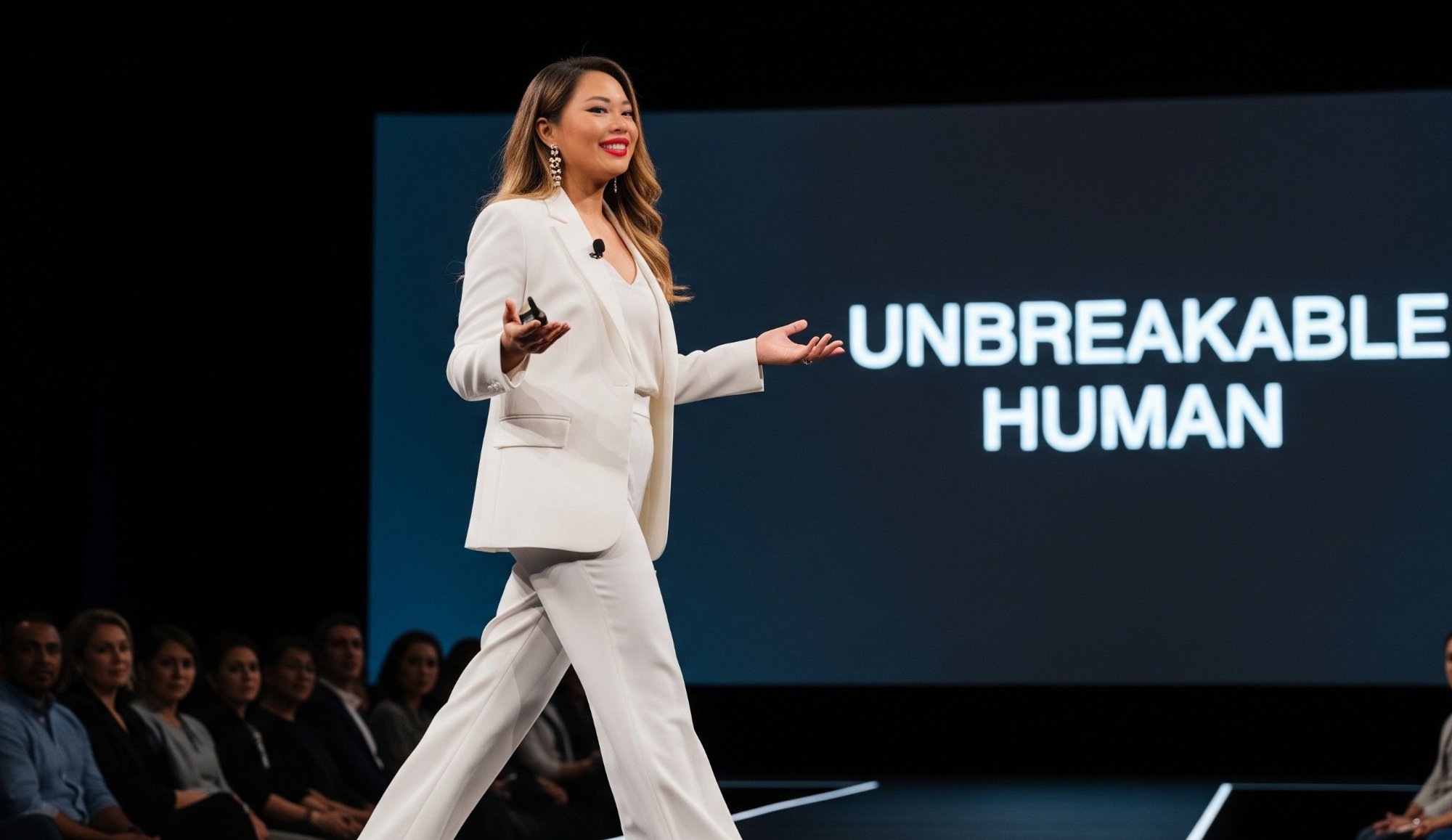
 pro
pro
“Decision Scientist | Founder of PAVNESS | Human Judgment & Decision Ownership in the AI Age”
Pav Lertjitbanjong is a decision scientist, former corporate strategy and analytics leader, and founder of PAVNESS.
After more than 20 years inside Fortune 500 and global organizations, she became obsessed with a problem that is getting harder as AI gets better:
When a machine materially shapes a consequential decision, what is the human still responsible for?
That is the work Pav studies and teaches.
Through PAVNESS, she helps leaders establish and practice a human standard for consequential decisions made with AI in the room — using decision science, live simulations, and a practical thinking routine rather than another lecture about prompts.
Your audience probably does not need another conversation about prompts, productivity hacks, or which AI tool launched this week.
They are already using AI.
The harder problem is what happens after the output looks good.
A recommendation arrives polished, specific, quantified and confident. Someone reviews it. Someone forwards it. Someone else approves it.
But who actually made the decision?
Pav explores the increasingly important gap between:
AI-assisted work that a human has seen
and
a consequential decision a human can actually explain, challenge and defend.
The conversation is practical, provocative and useful whether your audience consists of executives, managers, entrepreneurs, consultants, analysts, or ambitious professionals.
They leave thinking differently about every AI-assisted recommendation that lands in front of them.
Pav spent more than two decades working inside large, complex organizations, including strategic analytics leadership. Her work put her close to executives, restructurings, major operating decisions, and the uncomfortable reality of organizations.
She comes at AI through decision science.Pav holds a BBA in Decision Science and a Kellogg MBA. Her work focuses less on what AI can produce and more on what happens to human judgment after AI enters the decision process.
She gives people something they can use immediately.Her THINK routine is:
Tune In · Hypothesize First · Interrogate Everything · Narrow to the Call · Know How to Land It.
It gives professionals a way to use AI aggressively without quietly surrendering authorship of consequential decisions.
Who actually owns a decision once AI has materially shaped it — and why “human in the loop” is often far less meaningful than companies think.
2. Is AI Making Smart People Worse Thinkers?Not because AI is bad, but because a polished recommendation can collapse the distance between receiving an answer and forming a judgment.
3. Your Career Advantage When Everyone Has the Same AIWhen everyone can generate competent analysis, the differentiator becomes being the person trusted to question it, make the call, and defend why.